Water recovery
Biogas by-products and advanced processing improve water recovery across the site, reducing both draw and cost. Treated water is also suited to further industrial use.
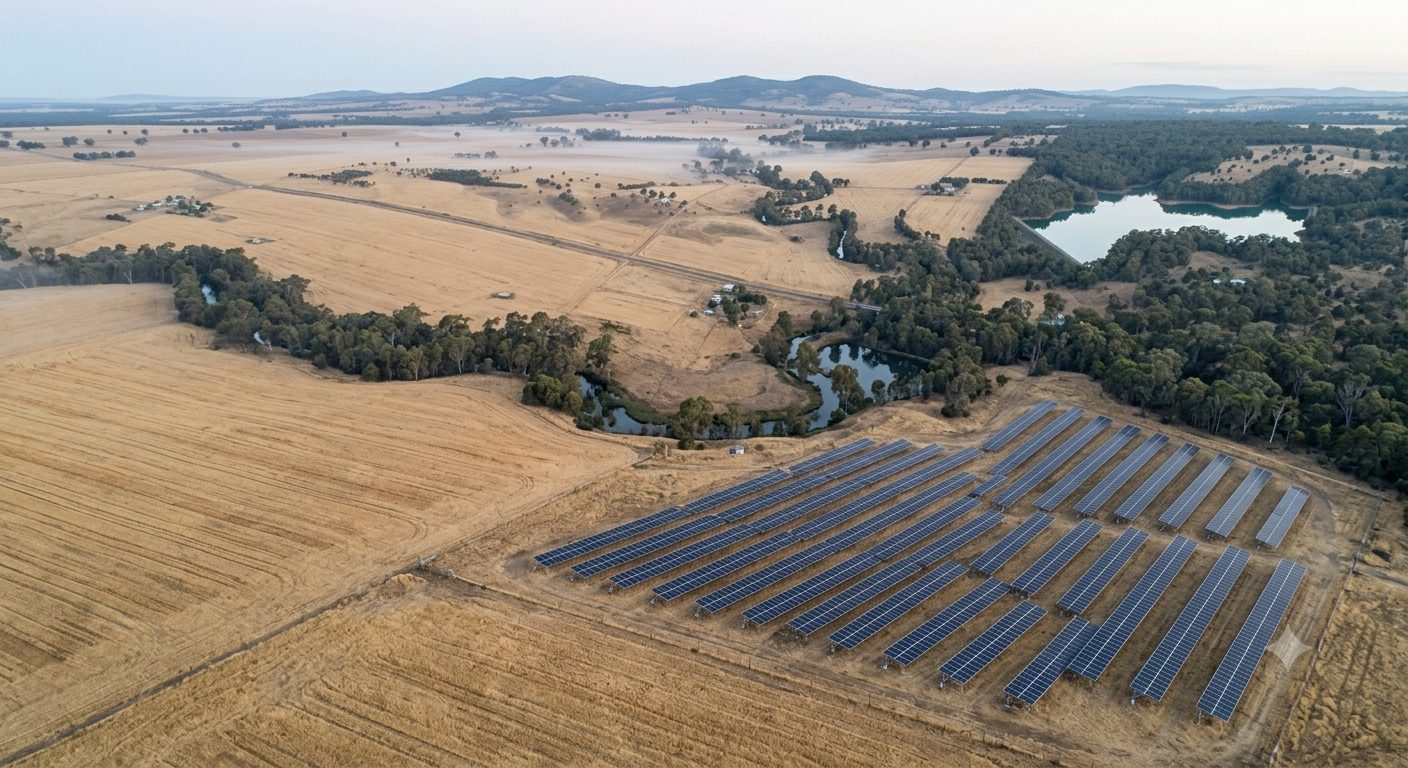
Clean power, dry tailings, an electric fleet and rehabilitated land are not additions to this project. They are how it was designed to work, and why it costs less to run.
Our commitment
Golden Camel Mining is committed to generating results and value for our shareholders, and for the local and regional economy and its people. Our goal is to preserve the profitability of the business while safeguarding the health, safety and welfare of the local community and the environment.
Mining has not always earned that trust, and we understand why it has to be demonstrated rather than declared. Every permit GCM holds was granted on the strength of controls we had already put in place, not promises we had made about the future.
What follows is how the project is built — the technology chosen, the waste avoided, the land returned, and the relationships that make it possible to operate at all.
Golden Greening
Each element lowers emissions and operating cost at the same time. That alignment is deliberate: sustainability that pays for itself does not get cut when conditions tighten.
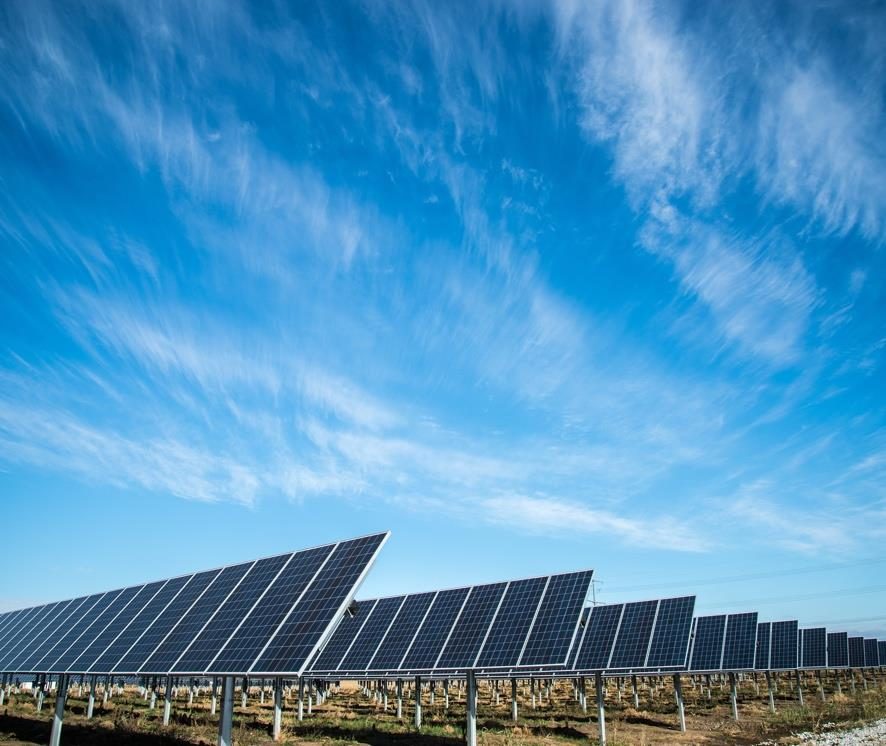
An on-site solar farm supplies low-cost clean power to the mines, the haulage fleet and both processing plants, at a fraction of the cost of grid supply.
A biogas facility processes food and garden organics diverted from Melbourne, producing power and gas for the site and for export to the grid — turning a waste stream into an input.
A battery farm firms the site's renewable generation, charges the fleet, and adds stability to the local network rather than drawing on it at peak.
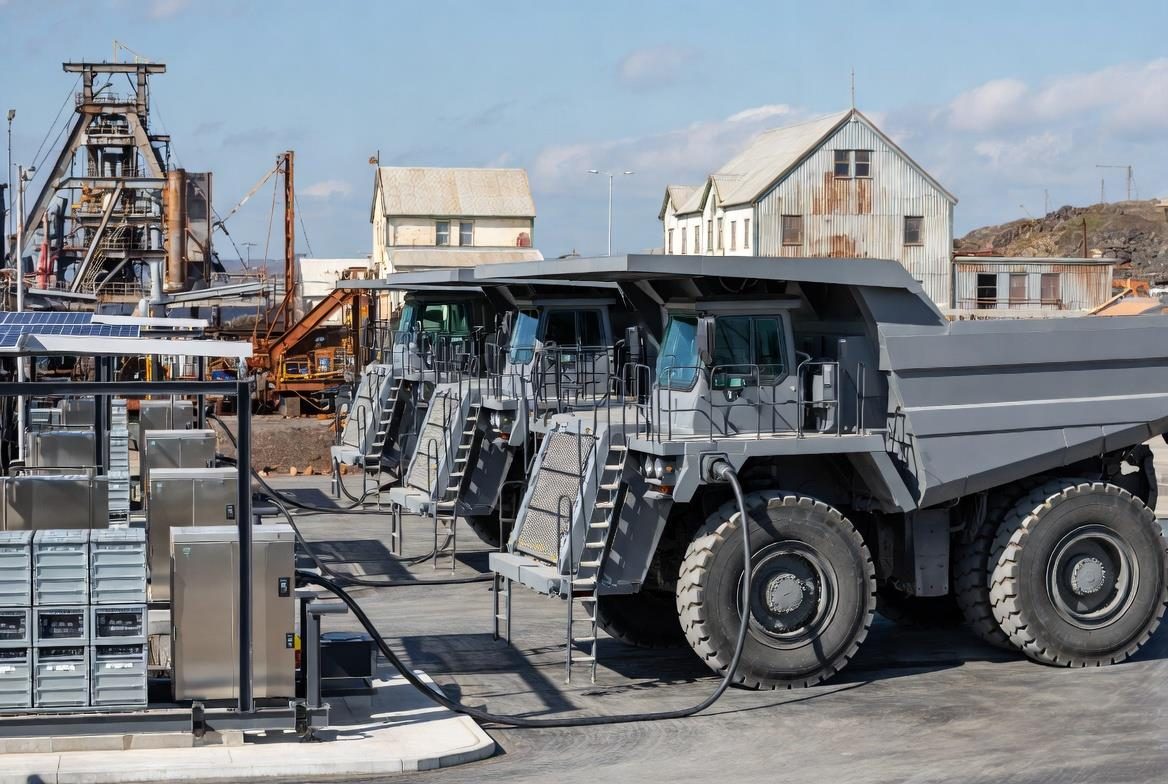
Mining, haulage and processing all run on electricity. A central battery distribution point supports interchangeable battery packs, which keeps equipment working while packs are charging.
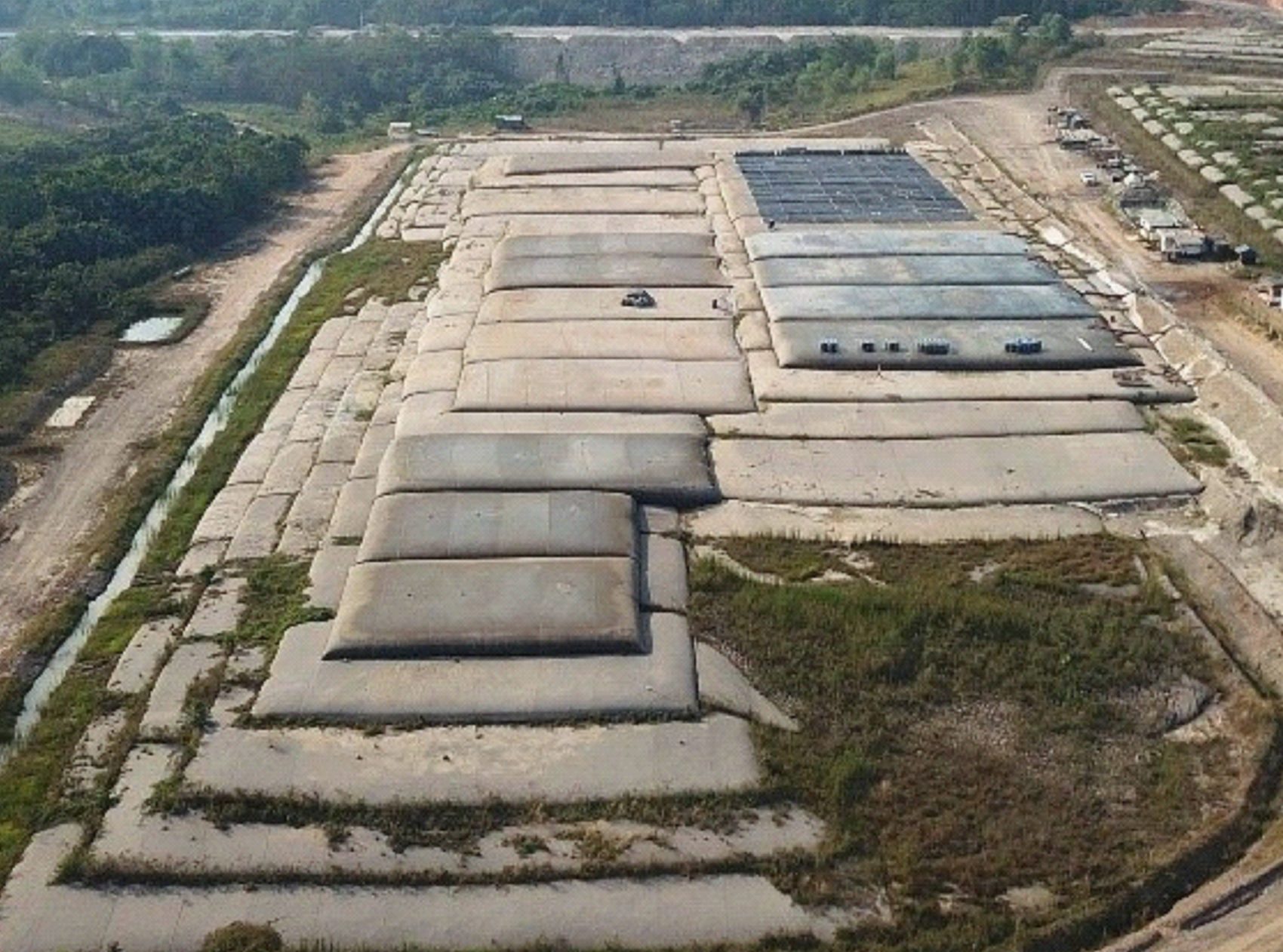
Geotube technology turns mine tailings into a carbon capture sink, generating Australian Carbon Credit Units from material that would otherwise be nothing but waste.
Detoxified tailings are reprocessed into a premium soil conditioner and returned to agricultural land, closing the loop on the operation's largest waste stream.
Sustainable tailings
Tailings dams are the single greatest environmental risk in modern mining, and the reason approvals for new storage have become so hard to obtain. We do not build one.
Instead, porous geotextile tubes dewater the tailings, which are then dry-stacked in a lined facility. Dried material is stable, can be safely stored, and can be handled again later — which is what makes both carbon sequestration and repurposing possible.
Before any of that, cyanide is destroyed in an INCO detoxification circuit. The residue is then detoxified further and reprocessed into a high-value soil conditioner for surrounding farmland. Water is recovered through the same process and returned to the circuit.
The facility is designed as a zero release operation. Nothing is discharged from the site, and the ground it occupies had already been disturbed by earlier mining before we arrived.
Biogas by-products and advanced processing improve water recovery across the site, reducing both draw and cost. Treated water is also suited to further industrial use.
Rehabilitation is planned from the first disturbance rather than deferred to closure, with a minimal surface footprint through every phase of exploration and mining.
The hub can re-treat tailings left behind by earlier operators, recovering metal that was previously lost and rehabilitating ground that has sat degraded for decades.
Community
Our neighbours are not stakeholders to be consulted. In several cases they are shareholders, landowners and contractors in the project itself.
Minority shareholders in the company include landholders located directly north of the oxide mine. The people most affected by the operation hold a stake in whether it succeeds.
Wherever feasible the project hires local labour and engages local contractors. The parcel of land containing the first mine is owned by the local transport contractor whose electric truck fleet will haul our ore to the plant.
We work with a local trucking company, a national logistics firm, a local maintenance group and a national mining equipment electrification specialist — aiming to revitalise Victorian gold mining with clean methods.
The development pipeline will make GCM a long-term employer and a significant contributor to the local economy. As the project ramps up we will be filling a wide range of positions, with the intention that people grow with the company rather than move on from it.
Recruitment, onboarding and community relations sit with a dedicated manager, not with head office.
The final stage of the project is agricultural. Soil conditioner produced from treated tailings, fibre cropping on rehabilitated ground, and water from the processing circuit are intended to support a working agricultural enterprise on land the mine has finished with.
We also intend to pursue land rehabilitation programmes in partnership with Traditional Owners, so that what is left behind has value to the people who will hold it longest.
Governance
GCM is a private company under the stewardship of directors with different professional strengths and experience. We take pride in upholding ethical practices and values in mining, and believe that this discipline positively influences day-to-day operations as much as it shapes reputation.
Environmental, Sustainability and Governance programmes are implemented by a dedicated manager who also holds responsibility for community relations and employment — deliberately combined, because in a district this size they are the same conversation.
Through previous trial mining and exploration, GCM adopted the highest standard of controls, monitoring and rehabilitation available to it. That record is the reason the company has been able to secure mining licences where others have not.
No other group globally is developing a new two-decade supply of sustainable precious metals, critical minerals and zero-emission downstream processing from a Tier 1 jurisdiction, at this combined scale.
Golden Camel Mining

Talk to us
We are glad to hear from neighbours, community groups, regulators and prospective partners. Ask us anything about the project.